












North Korean Hotel Of Doom Deserted For Nearly 40 Years
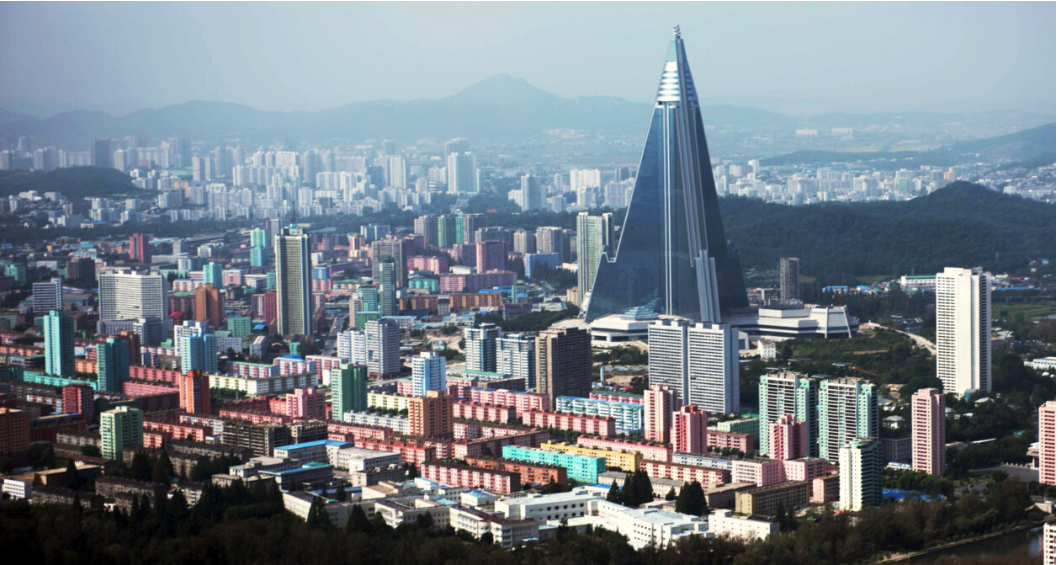
It has 105 floors, dominates Pyongyang’s skyline, and was once erased from official photographs.
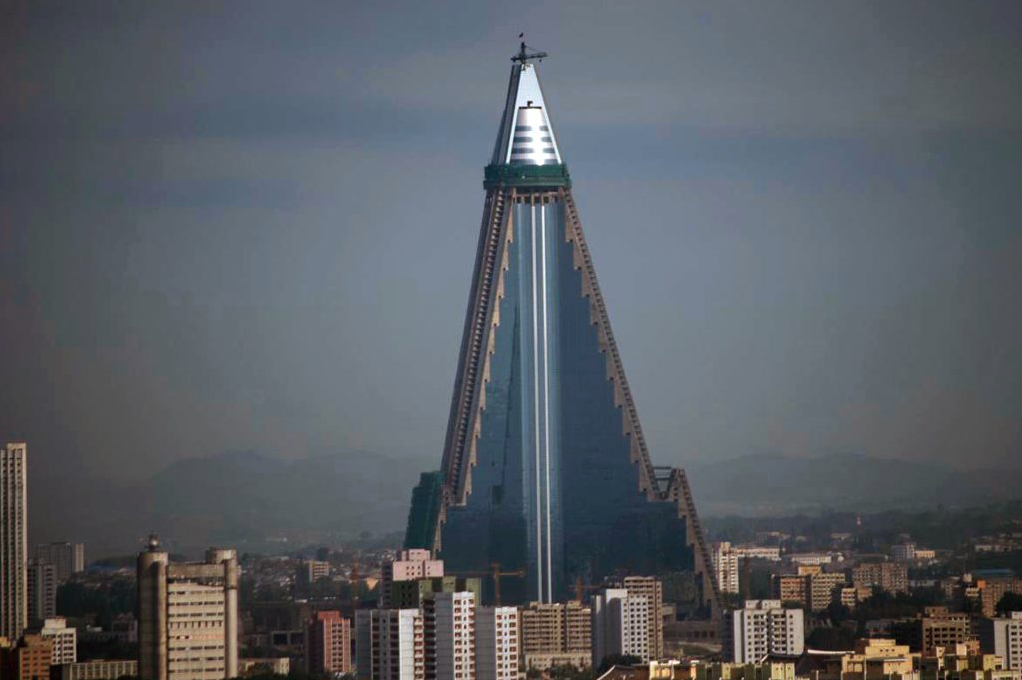
In 1987, North Korea began building the Ryugyong Hotel in Pyongyang. The name translates to “capital of willows,” a nod to one of the city’s old poetic titles. Plans called for it to be a 1,000-foot-tall pyramid-shaped skyscraper with 3,000 rooms, a bowling alley, a nightclub, and five revolving restaurants.
It was due to open in 1989. That didn’t happen.
Cut to late 2026, and the building still hasn’t been completed. It has since picked up several ominous nicknames like the ‘Hotel of Doom’, the ‘Phantom Hotel’, and the ‘Phantom Pyramid’.
In 2008, Esquire magazine described it as:
“The Worst Building in the History of Mankind.”
Now, decades later, despite several attempts to revive the project, none has yet succeeded.
Why has it taken so long? And why does a country that isn’t famed for its openness to foreign tourists need such a huge hotel? Some background is needed.
The Cold War, Olympic rivalry, and tall-hotel one-upmanship
During the grim and dismal days of the Cold War, South Korea was backed by the United States, and North Korea was backed by the Soviet Union.
In 1987, South Korea was undergoing a dramatic transition towards democracy and was gearing up to host the 1988 Summer Olympics. The South Korean government was yielding to demands for democratic reform, and the country held a direct presidential election that December. The country was opening up to the outside world, and a building boom had begun, especially in the capital, Seoul.
The two countries were understandably incredibly competitive. Earlier that decade, their one-upmanship had even extended to who had the highest flagpole at the border.
In addition to hosting the Olympics, a South Korean firm had just finished constructing the Westin Stamford in Singapore in 1986. At the time, it was the tallest hotel in the world.
North Korea came up with two ways to compete with its neighbour. The first was to host the “World Festival of Youth and Students”, a sort of socialist version of the Olympics that had been going on, at somewhat random intervals, since 1947.
In preparation for their alternative Olympics, the North Korean government is estimated to have spent around $4 billion on new roads, infrastructure, and a stadium.
The second major plan was the announcement of the construction of what was to be the world’s tallest hotel, the 105-storey Ryugyong Hotel. The plan was for it to open in time for the festival.
Work began, but it soon became apparent that the 1989 target was far too ambitious, and plans were changed. Instead, the hotel was to open in 1992, to celebrate the 80th birthday of Kim Il-Sung.
Unfortunately, although the building had achieved its full 1,080-foot height by 1992, reports of construction problems, alongside mounting financial difficulties, caused numerous delays. By this point, some estimates put the hotel’s construction cost at around $750 million, the equivalent of 2% of North Korea’s GDP.
The building’s structure may have seen progress, but it was still, essentially, a windowless shell. Work then stopped for roughly 16 years.
The USSR collapses, North Korea runs out of money, and the hotel is erased from official images
The Soviet Union collapsed in 1991, and with it went North Korea’s major trading partner and source of financial support. North Korea’s economy was already lagging far behind South Korea’s, but the loss of Soviet support made matters considerably worse.
From 1992 to 2008, the Ryugyong Hotel stood, half finished with a rusting crane on top, dominating Pyongyang’s skyline.
The colossal shell of the building was a massive embarrassment to the North Korean government. So they simply tried to ignore that it was there. In fact, they even went so far as to manipulate photos and erase the 105-storey building from images. It was excluded from official maps.
The structure started to decay due to the elements, and there was speculation that it would eventually have to be demolished. It was during this period that the less-than-flattering moniker ‘Hotel of Doom’ began. It seemed unlikely it would ever be finished.
A comeback? Enter the Egyptians
In 2008, Egyptian conglomerate Orascom signed a $400 million deal to build and operate a 3G network in North Korea. The company also became involved in finishing the Ryugyong’s exterior, although it said the two projects were not directly linked.
Aided by Egyptian engineers, the rusty crane was removed, and glass and metal panels were added. The exterior work was completed in 2011.
An Orascom executive said the company had not encountered too many problems resolving the reported structural issues. This sparked a bit of optimism, leading officials to announce that the hotel would finally be finished in 2012, to coincide with the 100th anniversary of the birth of President Kim Il-Sung.
Predictably, there were delays, and it was soon clear the deadline would be missed. However, in November 2012, the Kempinski chain announced that it would be managing the Ryugyong Hotel and planned to partially open it in mid-2013. Things were looking up.
But then, in March 2013, the Kempinski group said plans to open the hotel weren’t going to happen. They claimed only initial discussions had occurred, and the market wasn’t ideal.
While this may be true, commentators noted that in February 2013, North Korea conducted an underground nuclear test and consequently raised global tensions considerably.
Once again, things went quiet.
More promises, LED screens, and a possible casino
At the end of 2016, a report emerged that a representative from the Egyptian firm Orascom had visited North Korea. In 2017 and 2018, people also observed that work was underway at the site, and access roads were being constructed.
In July 2018, an LED screen that had been installed on the entire side of the building began displaying animations and movie scenes. That same month, a sign was erected that simply read: “The Ryugyong Hotel” in Korean and English.
Activity continues to be reported. Simon Cockerell, the general manager at Koryo Group — a Beijing-based company that specialises in North Korean tours — has actually been inside. When asked on CNN about the likely opening of the Ryugyong Hotel, he said:
“It’s very hard to say, because since the building was clad in glass, you can’t see inside. No doubt something’s going on. It’s a very large building. It’s not inconceivable that some part of it may open before the whole of it could open. If it was my building, I’d focus on the top and the bottom.”
In 2024, Radio Free Asia reported, citing a Pyongyang resident, that authorities were considering offering a foreign investor the right to operate a casino in exchange for paying to complete the hotel’s interior.
Later that year, the broadcaster reported that North Korean officials had approached Russian construction company LSR Group for assistance, apparently without success. It is all a bit murky, and the account also relied on an anonymous source.
As of October 2026, no agreement to finish the building has been publicly confirmed.
Even if the Ryugyong Hotel does open, it will no longer break any records
If the ‘Hotel of Doom’ does eventually open, it will no longer be such a groundbreaker. For a start, it would not be the world’s tallest hotel. That distinction now belongs to the 1,237-foot-tall Ciel Dubai Marina, which opened in November 2025.
It won’t even be the tallest building on the Korean Peninsula. The Lotte World Tower in Seoul is around 738 feet taller.
In 2015, it even lost its status as the Guinness World Record holder for being the world’s tallest unoccupied building. That’s currently the 128-storey Goldin Finance 117 tower in China. Although, at a guess, that was a record they would have been happy to lose.
As of October 2026, nearly four decades after construction began, the Ryugyong Hotel has yet to welcome a single paying guest. There is still no confirmed opening date.
I will probably update this article in five years to report that it may finally be on the verge of opening. Don’t hold your breath, though.
A version of this post was originally published on my Substack, Intruiging Times. There are lots of similarly fascinating stories there.