








The Astonishing Story Of Nicholas Alkemade, The Rear Gunner Who Fell 18000 Feet
And was almost shot as a spy…
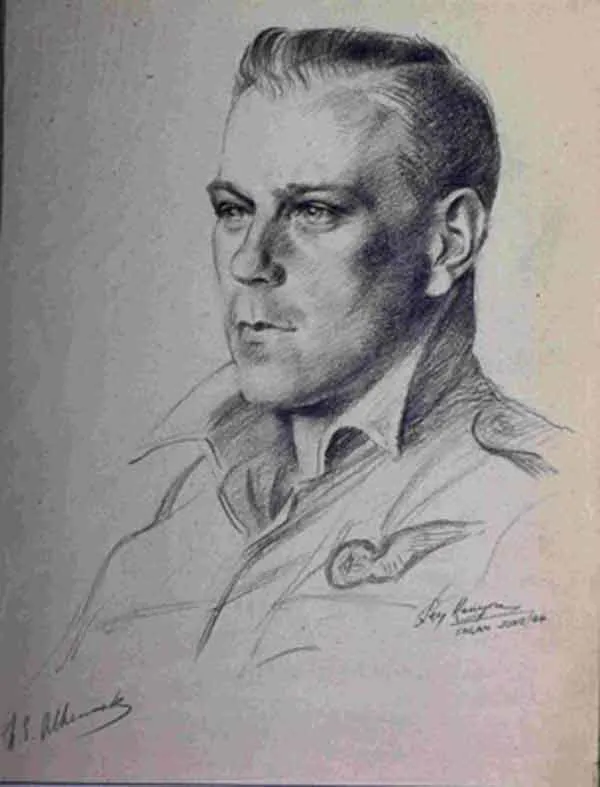
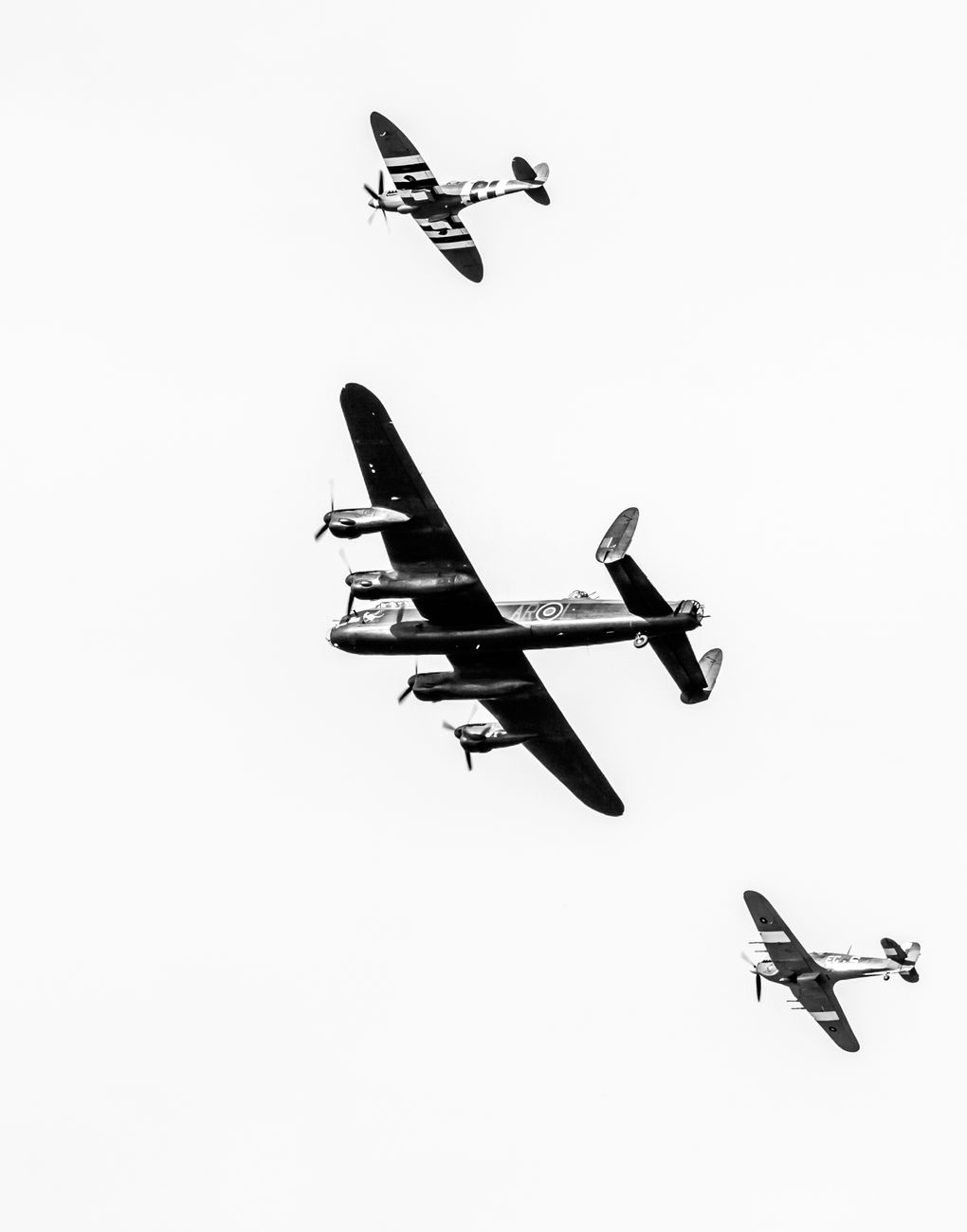
Nicholas Stephen Alkemade was born in Norfolk, in the United Kingdom, in 1922. When World War Two began, he enlisted as a rear gunner on Avro Lancaster bombers with 115 squadron. His crew had successfully completed 14 missions when, on the night of the 24th March 1944, they were assigned a mission to attack Berlin.
Their aircraft, nicknamed “Werewolf,” was one of 811 planes deployed to strike the German capital that night. Alkemade and his six crew members carried out the mission as planned. However, strong winds on their return flight blew them southward into the Ruhr area, which was heavily fortified with anti-aircraft defences.
The Werewolf is shot down, and Alkemade makes a fateful jump
The luck that had carried them through their 14 previous missions didn’t hold. Just before midnight, the Werewolf was attacked by a Junkers fighter. The bomber’s wing and fuselage were struck, immediately bursting into flames. Alkemade, stationed as the rear gunner, tried to return fire, but the windows of his turret had already been blown out, and flames rapidly consumed the rear of the plane.
Pilot James Newman knew the aircraft was doomed and ordered the crew to grab their parachutes and bail out. For Alkemade, this command presented a dire problem. The rear gunner’s station didn’t have space for a parachute, so he had to access a storage locker in the rear section of the plane. To his horror, he discovered that his parachute was already on fire.
It was then he began to realise how much trouble he was in. The heat was immense. Almost immediately, his oxygen mask began to melt, and he felt his hands becoming engulfed in flames. He shut the door, but the raging fire began to burn hotter.
Nicholas Alkemade was out of options. As he later recounted:
“I had the choice of staying with the aircraft or jumping out. If I stayed I would be burned to death — my clothes were already well alight and my face and hands burnt, though at the time I scarcely noticed the pain owing to my high state of excitement…I decided to jump and end it all as quick and clean as I could. I rotated the turret to starboard, and, not even bothering to take off my helmet and intercom, did a back flip out into the night. It was very quiet, the only sound being the drumming of aircraft engines in the distance, and no sensation of falling at all. I felt suspended in space. Regrets at not getting home were my chief thoughts, and I did think once that it didn’t seem very strange to be going to die in a few seconds — none of the parade of my past or anything else like that.” Nicholas Alkemade (quote source here).
He fell 18,000 feet. The Werewolf exploded above him, and as he plummeted toward the ground, Alkemade lost consciousness.
A miracle landing
A few hours later, much to his own astonishment, Alkemade woke up. He was lying on his back on a pile of snow, and through the canopy of some pine trees, he could see the stars.
Gingerly, Alkemade moved his arms and legs. Miraculously, he seemed uninjured. As he lay there, he realised the pines above him were young with supple, bendy branches. They must have slowed him down enough so that when he landed on the pile of snow beneath, the impact hadn’t been too hard.
Reflecting on his extraordinary fortune, the first thing he did was to smoke a cigarette and reflect on his good fortune. When he finally stood up, he found he had a twisted knee and had lost a boot – presumably in the trees above. Twenty yards from where he had landed was an open area devoid of snow. If he had landed there, he would surely have died.
Unable to walk due to his injured leg, Alkemade discarded his unused parachute harness and blew his distress whistle. Local Germans soon discovered him and transported him to a hospital, where his burns were treated. Against all odds, he had survived the unimaginable.
Then the Gestapo arrived.
Alkemade is accused of being a spy
As a captured airman, Alkemade was expected to be treated as a prisoner of war. This would have seen him sent to a prison camp.
However, the Gestapo interrogated him and asked where his parachute was. When he said he didn’t have one, that he had jumped from the plane and had just been lucky, they were understandably sceptical. They accused him of burying the parachute and being a spy – a crime punishable by death.
Despite the intense questioning, Alkemade stuck to his account. Investigators eventually located his discarded harness, which showed no signs of use. To further corroborate his story, the Werewolf’s wreckage was found 20 miles away. In the shredded and burned remains of the aircraft, the Gestapo found Alkemade’s parachute with the ripcord and cables still wrapped up tight.
Convinced at last, the Gestapo officially recognised the incredible truth, and Alkemade was declared a prisoner of war. The Germans were impressed and even issued a commemorative certificate that stated Alkemade had indeed fallen 18,000 without a parachute and survived. He was sent to Stalag Luft III, a POW camp in Poland.
The ‘Long March’, the war’s end, and the fate of the Werewolf’s crew
Alkemade’s story earned him a degree of celebrity among fellow prisoners. He received extra cigarette rations and even had his portrait drawn by a fellow prisoner, Flight Lieutenant Bennet Kenyon.
As the war neared its conclusion, the advancing Russian forces prompted the Germans to evacuate prisoners westward. Alkemade was among the thousands forced to endure the infamous “Long March,” braving blizzards, starvation, and exhaustion. Tragically, many prisoners did not survive the ordeal, but Alkemade lived to see the war’s end.
Of the seven men on the Werewolf that night, only three survived: Alkomade, the rear gunner; Sergeant Geoffrey Burwell, the wireless operator; and Sergeant John Cleary, the navigator. The others all sadly lost their lives.
Life after the war
Following his wartime experiences, Nicholas Stephen Alkemade returned to civilian life. He settled in Loughborough with his wife and children, living a peaceful life until his passing in 1987. His story remains one of the most extraordinary tales of survival in military history.