








Thailand’s most famous ghost still has a shrine in Bangkok
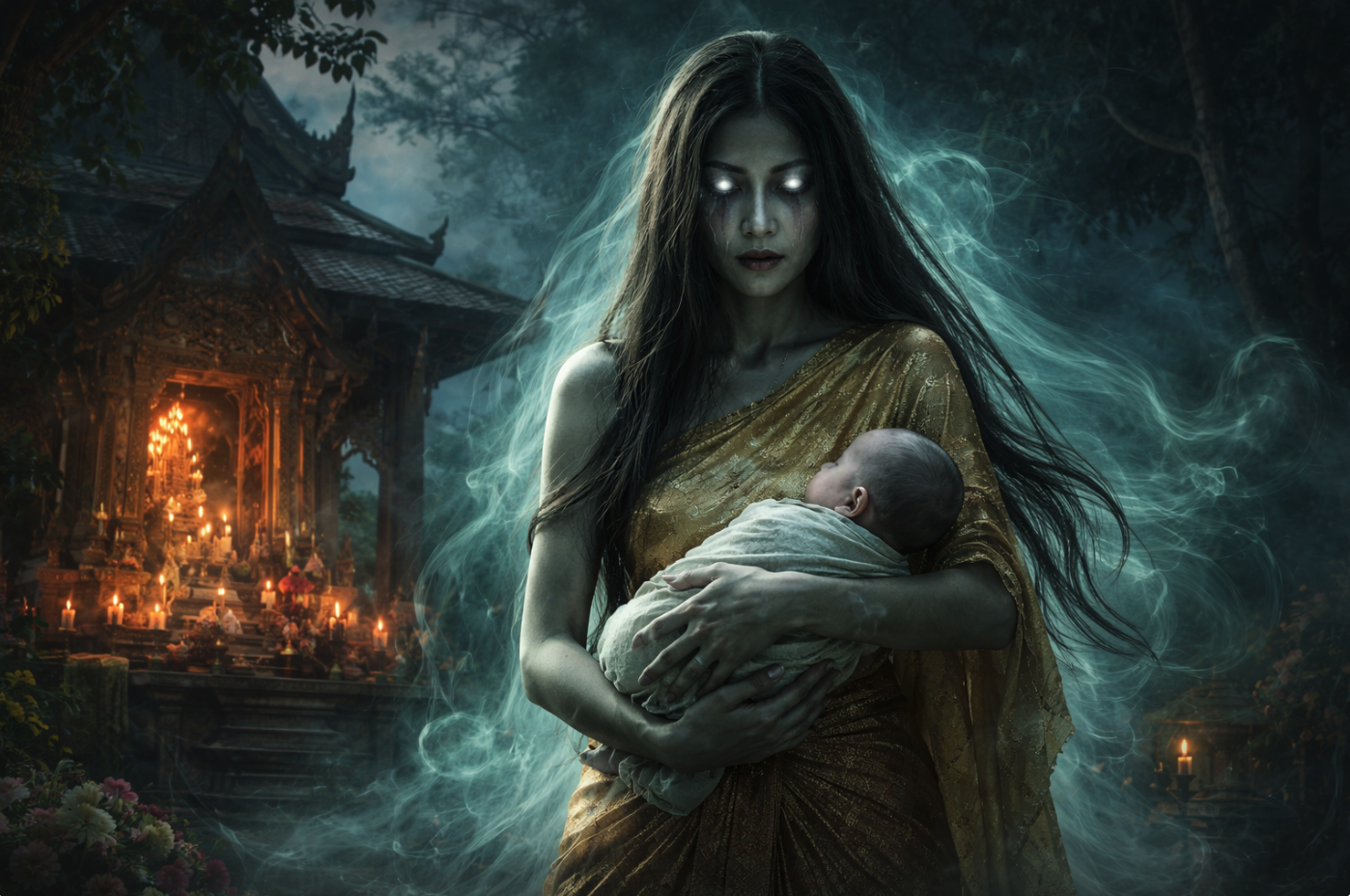
Bangkok is a city of glass towers, traffic jams, rooftop bars, shining malls, mad backstreets, and endless construction. I should know, as I’ve lived there for 12 years. I also happen to live in an area called Phra Khanong, which is coincidentally home to one of the most feared and beloved ghosts in Southeast Asia.
Her name is Mae Nak.
Her story is a tale of love, death, denial and an unusually determined spirit who refused to let something as minor as childbirth mortality interfere with married life. It has been retold for more than a century, adapted into dozens of films, and transformed from a horror legend into something closer to a national myth.
At the centre of it all is a young couple and a death that did not quite stick.
The Story of Mae Nak
The legend is set in the mid-19th century, in what was then the rural riverside district of Phra Khanong. Today it is firmly inside Bangkok and is full of bars, restaurants, condos, and shops. At the time, it was quiet, leafy and far from the capital’s political centre.
Nak and her husband Mak were newly married and living in a stilted wooden house by the river. Soon after, Nak became pregnant. Unfortunately for the young family, war intervened. Siam was engaged in conflict and Mak was drafted into the army before the child was born.
While Mak was away, he was badly wounded and spent months recovering. Meanwhile, back in Phra Khanong, Nak went into labour. It was long and complicated, and tragically, both mother and child died.
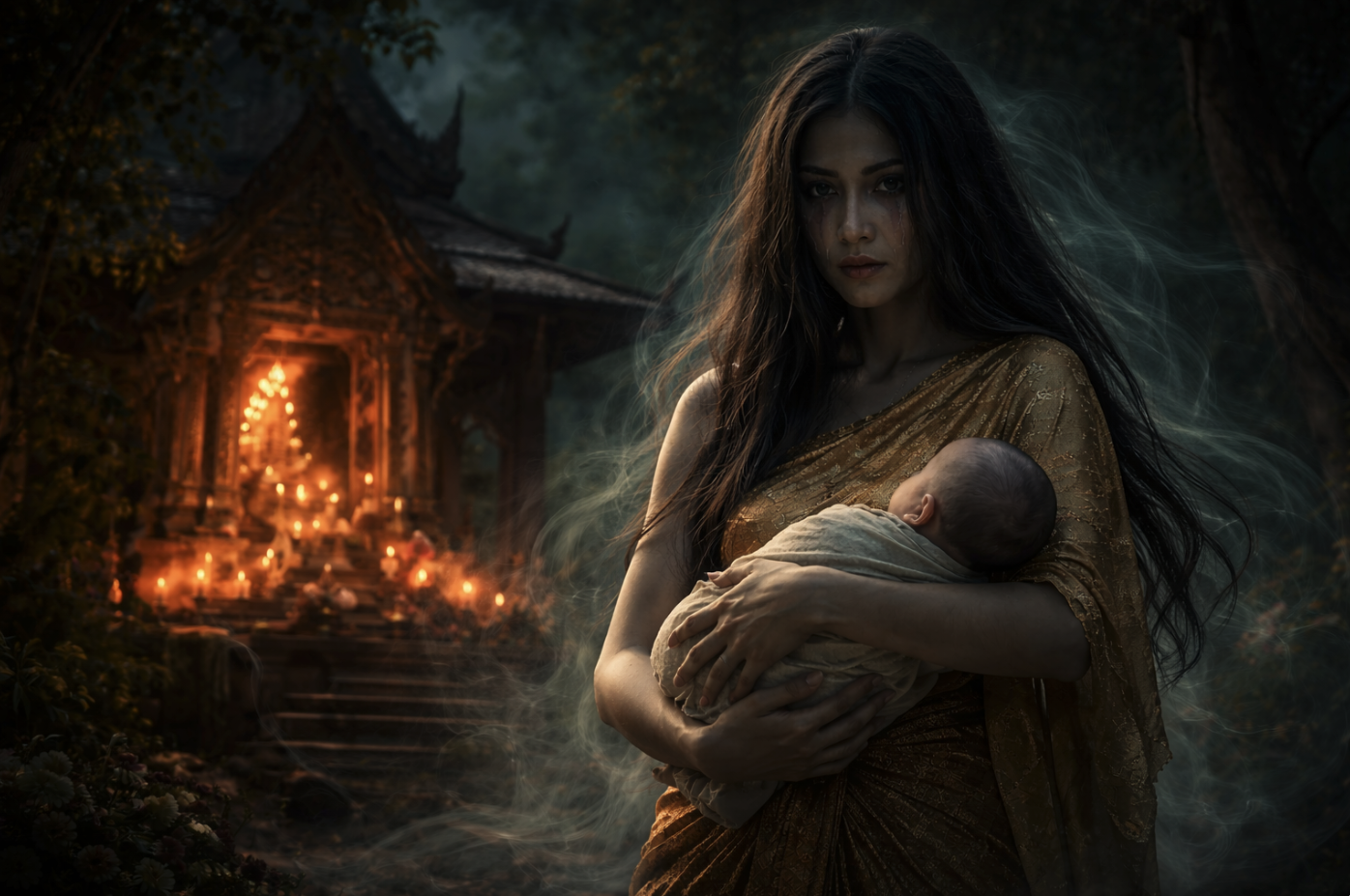
That should have been the end of the story. But Nak wasn’t going to let death get in the way of her happy family. So instead, according to the legend, Nak returned home as a ghost.
When Mak finally came back from the war, he found his wife and newborn son waiting for him. Nak looked and acted as she always had, and now they had a little boy. She wasn’t the wispy non-solid traditional ghost – she was the same. The household resumed as if nothing had happened.
The only problem was that the villagers knew Nak and her baby were dead.
They were understandably uneasy. Mak, unaware of the truth, noticed that neighbours kept their distance. One friend eventually decided he had to tell him, but before he could, Nak killed him. Anyone else who threatened to reveal the deception met the same fate. Often quite gruesomely.
The illusion continued. Mak lived beside his dead wife without realising it. Time moved on.
Then came the lemon incident.
Nak is unmasked as a ghost
One evening, Nak was preparing dinner and dropped a lemon through a gap in the floorboards of their raised house. Forgetting that Mak might be watching, she stretched her arm through the floor and down to the ground below to retrieve it.
Mak saw. He had already had some sneaking suspicions and now realisation dawned with a sudden chill. He calmly excused himself and stepped outside. Instead of returning, he did something sensible – he legged it.
The villagers, now certain Mak understood the danger, armed themselves with torches and burned the house down. The plan had an obvious flaw. Despite Mak apparently passing as a human, fire still does little to a ghost. The villagers had basically just succeeded in annoying her.
Mak sought refuge in a monastery as sacred ground offered protection from angry spirits. Nak couldn’t follow him there. But she remained in the village, enraged and violent, blaming the community for destroying her family. In most versions of the story, she went on a mini killing spree.
A monk was eventually called in to deal with the situation. In one version of the legend, he performed an exorcism and trapped her spirit in a clay pot which he cast into the river.
Unfortunately, that solution proved temporary. A pot in a fishing community is not a high-security prison and soon Nak escaped.
It was only when a revered monk, Somdet Phra Phuttachan, intervened that her spirit was finally subdued. According to the legend, he confined her essence to a fragment of her forehead bone and wore it in his waistband as a protective relic. Some versions claim this relic later came into the possession of the Thai royal family.
Mak, meanwhile, survives. In most tellings he becomes a monk and lives quietly thereafter. In others, he remarries and attempts a normal life, which feels like an act of reckless optimism given recent events.
A Different Explanation
Like many enduring legends, Mae Nak’s story has a possible rational counter-theory.
Thai historian Anek Nawikamul once uncovered an 1899 newspaper article suggesting that the tale may have been fabricated. In this account, a pregnant woman named Nak did die in Phra Khanong, but she had already given birth to a son. The son allegedly feared his father would remarry and divide the inheritance.
To prevent that, he is said to have invented the ghost story, even dressing in women’s clothes and throwing stones at boats to reinforce the illusion.
It is impossible to confirm which version, if either, is rooted in reality. (Reality being very relative here.) Nicknames such as Nak were common and the historical record is thin. Folklore, however, tends to prefer the dramatic version. A murderous, heartbroken spirit is more compelling and makes for a better story than a scheming heir.
From Horror to Shrine
What makes Mae Nak unusual is not just her violence but her afterlife in Thai culture. Violent ghosts are ten a penny here, but she has resonated down the ages.
She has been portrayed in horror films, romantic dramas, comedies, animations and even operas. The 2013 film Pee Mak became, at the time of its release, the highest-grossing Thai film in history. Each generation reshapes her story to suit its own anxieties and tastes.
More surprisingly, she now has a shrine.
Next to Wat Mahabut temple in modern-day Phra Khanong stands a statue of Mae Nak holding her child. Devotees bring offerings of flowers, incense and toys. Women pray for safe childbirth. Others ask for protection from military conscription or for help in relationships.
The murderous ghost has become a guardian spirit.
That transformation says something about Thai belief systems. Spirits are not always purely good or evil. They are powerful. They must be respected. And sometimes, if properly appeased, they can help.
Bangkok has changed almost beyond recognition since the 19th century. Yet people still queue to leave offerings at her shrine.
Ghost stories endure because they speak to fears common across cultures. Death in childbirth was once common and war still separates families. Love remains irrational.
Mae Nak refused to accept loss, and in doing so, she became immortal.
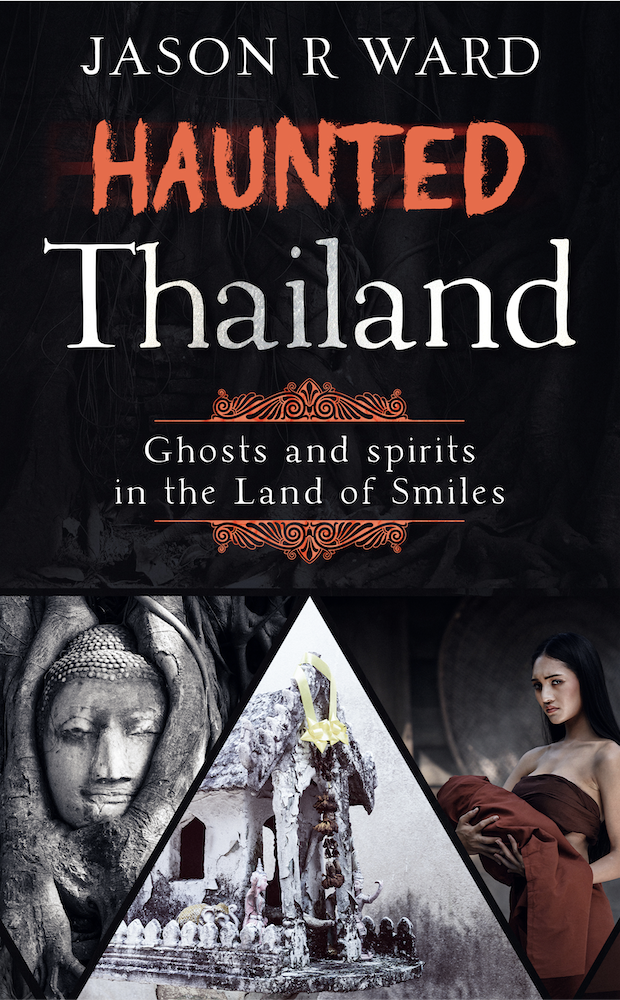
If you are interested in more tales like this, they are explored in greater depth in Haunted Thailand: Ghosts and Spirits in the Land of Smiles, which examines the country’s most famous supernatural legends and the beliefs that keep them alive. You can check it out here.