












Inside The Fascinating World Of AI Poker Tournaments – Apparently AI Can Now Bluff
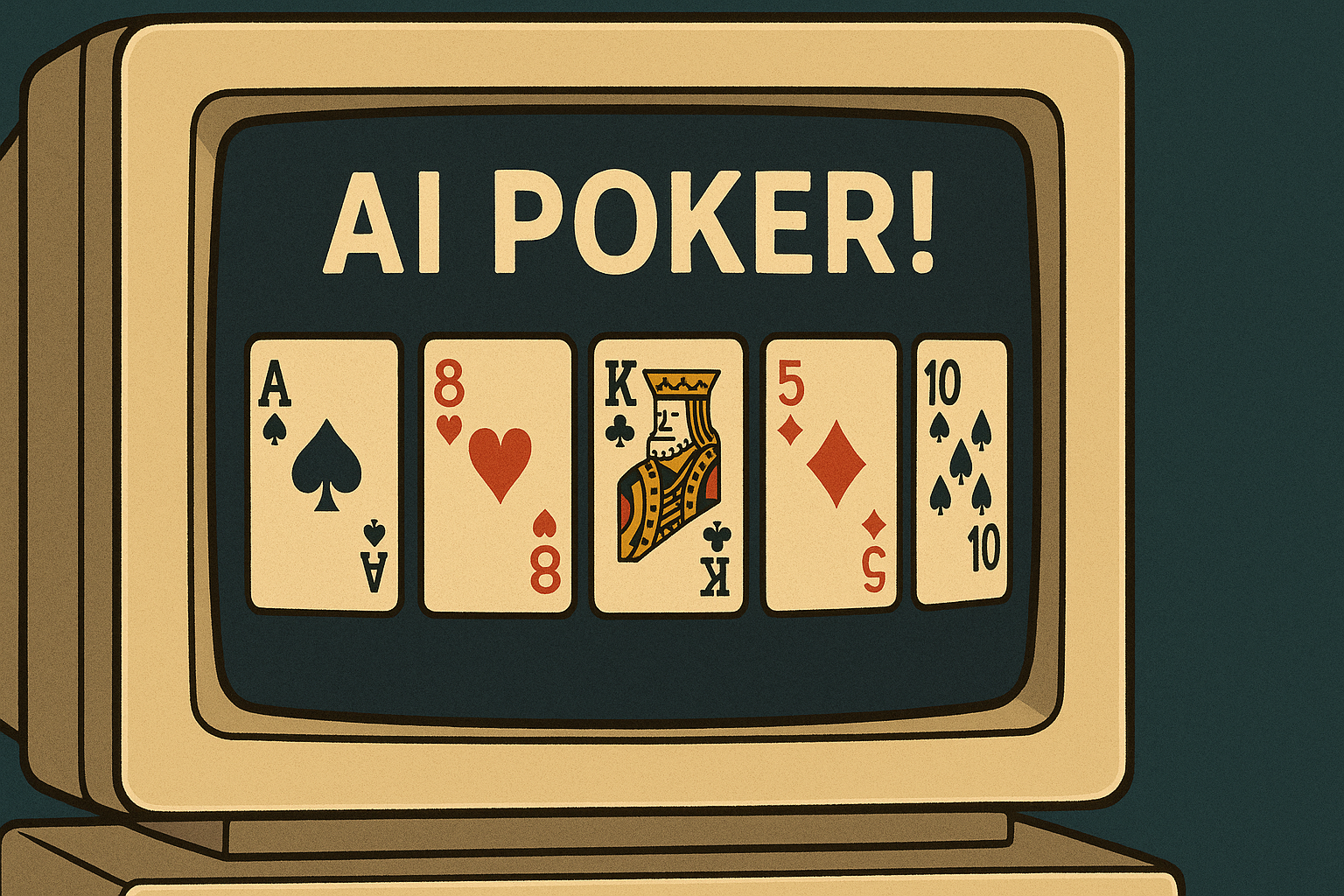
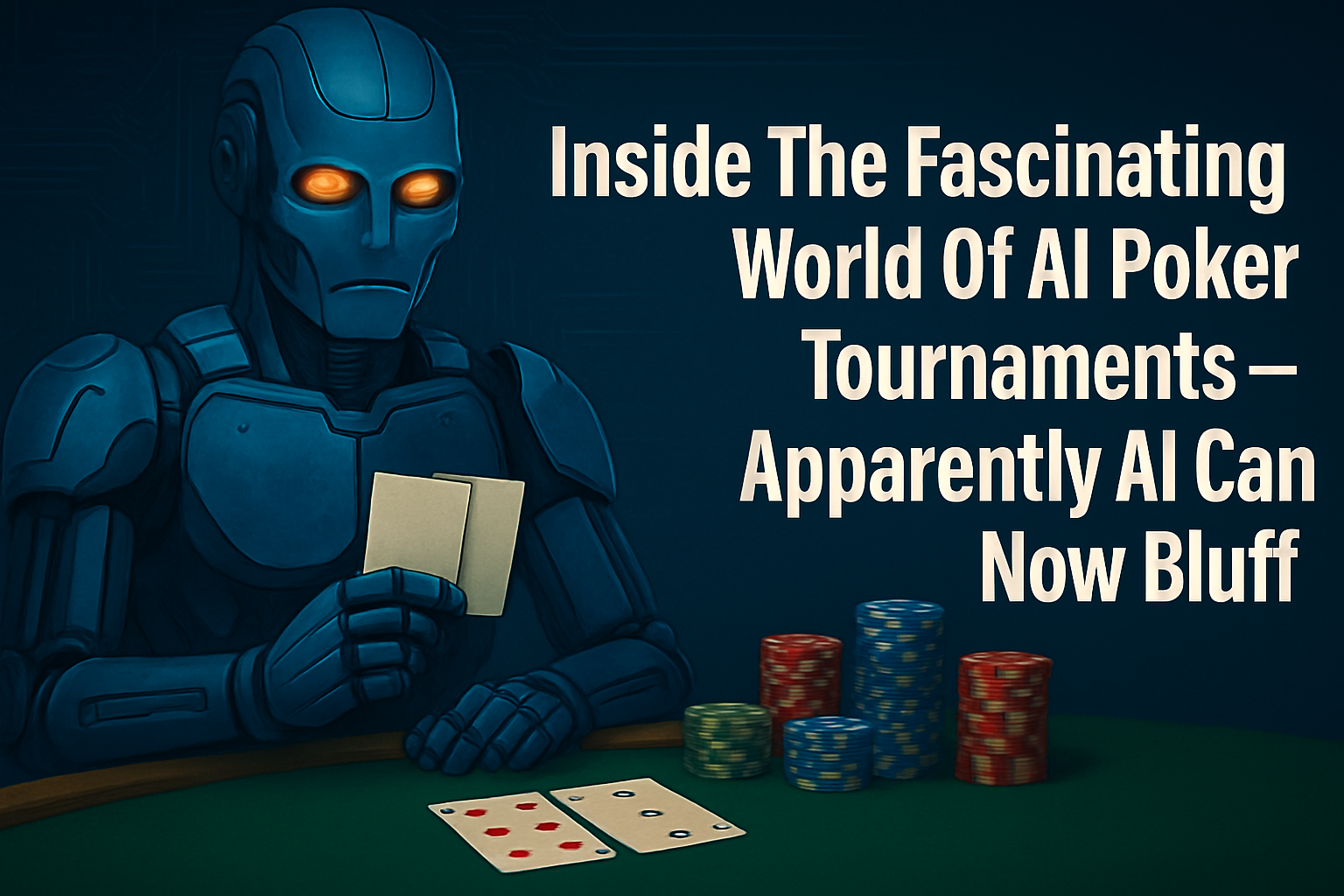
AI poker is here and having tournaments devoid of humans. Apart from feeling weirdly left out, it has left me questioning the wisdom of teaching entities smarter than us, how to outwit and even lie to us.
I read into it and found that AI poker tournaments aren’t actually training grounds for beating me at online poker – the way AI chess blatanly is.
The whole scene is a lot more fascinating than it first seems and may actually benefit the human race. (Or doom us, but whatever.)
Computers have been beating us fleshbags at games for ages
For decades, games have been used as proving grounds for artificial intelligence. Chess fell in 1997, when IBM’s Deep Blue defeated Garry Kasparov. I remember hearing about it when it happened and the mildly depressing achievement it marked. Go followed in 2016, when AlphaGo dismantled one of humanity’s most complex abstract games. Again, it was vaguely sad for humanity.
But there was always one game that seemed resistant to machines: poker.
Poker is not a game of perfect information. Players do not see all the pieces. You need to practice having an emotionless face (unless you’re online, in which case – go wild). Success depends on probability, deception, misdirection, incomplete data, and psychological pressure. It is a game built on uncertainty, intuition and bluffing. These are traits long assumed to be uniquely human.
That assumption did not survive contact with modern AI poker playing bots.
AI poker tournaments are actually research tools
Since 2006, researchers have been competing in organized computer poker tournaments, the most notable being the imaginatively named Annual Computer Poker Competition (ACPC). Teams from universities and research institutes submit poker-playing programs that compete directly against each other in formats such as heads-up Texas Hold’em, multi-player games and no-limit variants.
These are not flashy esports events. They are research tools. Each program plays millions of hands, refining strategies through self-play and statistical analysis. Winners are judged on long-term profitability over vast sample sizes. Basically, they’re awarded for how well they perform when allowing for luck.
Prize money varies by year and sponsor, but competitions have offered thousands of dollars, research grants, and industry recognition. Basically, winning teams aren’t in it (just) for the cash. They gain prestige in a highly competitive field that feeds directly into academia, finance, cybersecurity and defense research.
They are now officially better at poker than humans
For years, computers held their own only in simplified versions of poker. Limit games, with capped betting, were manageable. No-limit poker – the version you see in real casinos – was another beast entirely. The sheer number of possible game states made brute-force solutions impossible.
That barrier finally fell in 2017.
A system called Libratus, developed at Carnegie Mellon University, defeated top professional human players in heads-up no-limit Texas Hold’em over a prolonged match. Unlike earlier systems, Libratus did not rely on human-designed strategies. It learned through massive amounts of self-play, identified weaknesses during the match, and adjusted its approach accordingly.
Two years later, researchers went further. Pluribus, another CMU system, defeated elite human professionals in six-player no-limit Hold’em. This is a chaotic environment where alliances shift, table dynamics matter, having a poker face is important, bluffing can be key, and even humans struggle to explain their reasoning. Especially after a few drinks.
AI poker programs can now kind of bluff
One of the most unsettling discoveries was how these systems behaved. The AIs did not bluff often, or rarely. They bluffed precisely. They made small, suboptimal-looking bets that forced opponents into mathematically bad decisions. Essentially they made bets that looked like mistakes or bad calls, but were actually mathematically sound.
Human players described playing against them as disorienting. The machines were not emotional, reckless or cautious. They were indifferent.
Poker was never about psychology alone. It was about probabilities under uncertainty. When you think about it that way, it makes sense that the machines could navigate that terrain better than us.
AI poker tournaments are huge for research
Today, computer-versus-computer poker remains a standard benchmark in AI research. It’s pretty dull for spectators, though, and many matches are never seen by the public. Instead, they are played silently on servers as algorithms grind through statistical war. But their influence is everywhere.
The techniques developed for poker are now used in auction systems, financial trading, cyber defense modeling, and negotiation software. Essentially, anywhere decisions must be made without full information and against adversaries who adapt.
Poker did not teach computers how to gamble. It taught them how to reason in the real world. And it has to be asked – is it really a good idea to teach an advanced AI how to bluff and lie? I guess we’ll find out.