






The Strange History of Funny Surnames Around the World
Some surnames mean ‘born nude’, ‘nobody’, and ‘big butt’. By why?
Surnames are ubiquitous now, but that wasn’t always the case. Sometimes people made them up on the spot and got incredibly inventive.
Even a few hundred years ago, surnames weren’t as common as you might think. The idea of having a surname was a lot more regional and frequently depended on social class. I live in Thailand, and they only decided to adopt surnames in 1913.
When the French occupied what was about to be called the Netherlands in 1811, they conducted a census that required everyone to provide their surnames. It wasn’t common for the Dutch to have surnames back then, so many made up names on the spot.
In a pattern of behaviour found across the world, people chose the first thing that tickled their fancy. Some of the names are logical, like Van der Hoek, which means ‘from around the corner’, but others got hilariously inventive and downright rude or a pretty dark.
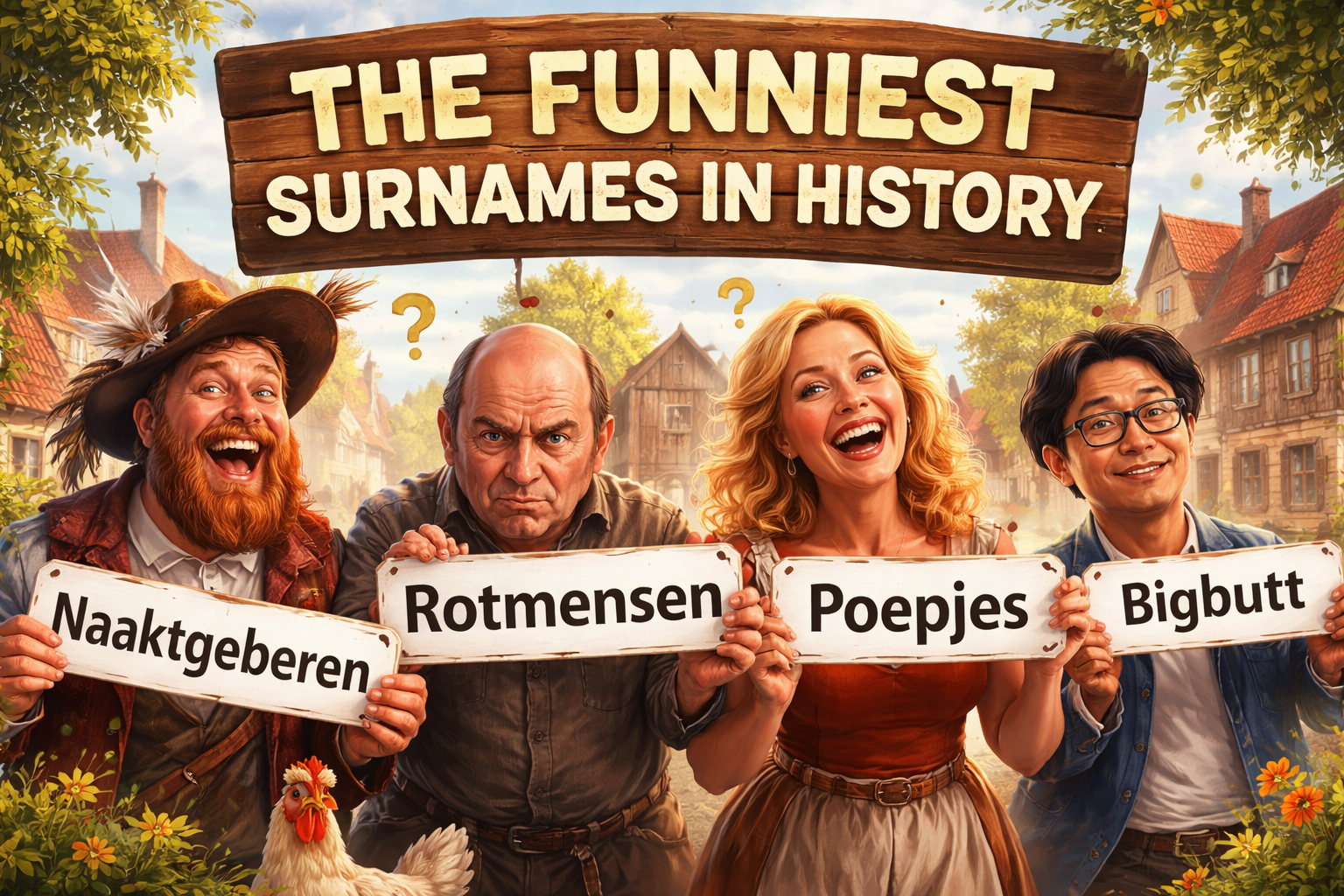
The Dutch were understandably annoyed at being occupied and didn’t take things too seriously, prompting surnames like Naaktgeboren (born nude), de Graaf (the grave), and even Anus (which means anus). These names are still around today.
This might sound like fun (and it totally is), but these aren’t one-offs. Many names that were clearly invented on the spot were then passed down to unfortunate descendants. Lots are still incredibly common today.
This has historical benefits, as the names chosen also provide a fascinating insight into the lives of people who were usually illiterate and would otherwise have disappeared from history.
It is also fascinating and, if I’m being honest, fun.
The Dutch have some of the best surnames
The combination of rebellion against an occupation, a good sense of humour, and a lot of people lacking a surname created the perfect storm in the Netherlands. Not all came from the census, but a lot did. You can get a good insight into the Dutch at the time by looking at some of the surnames they invented.
Surnames from people who were clearly fed up:
- Niemand (nobody)
- Zeldenthuis (rarely at home)
- Zondervan (not from anywhere)
- Van der Hoek (from around the corner)
- Zonderkop (headless)
- Dodeman (dead man)
- de Graf (the grave)
- Gekkehuis (looney bin)
- Schooier (beggar)
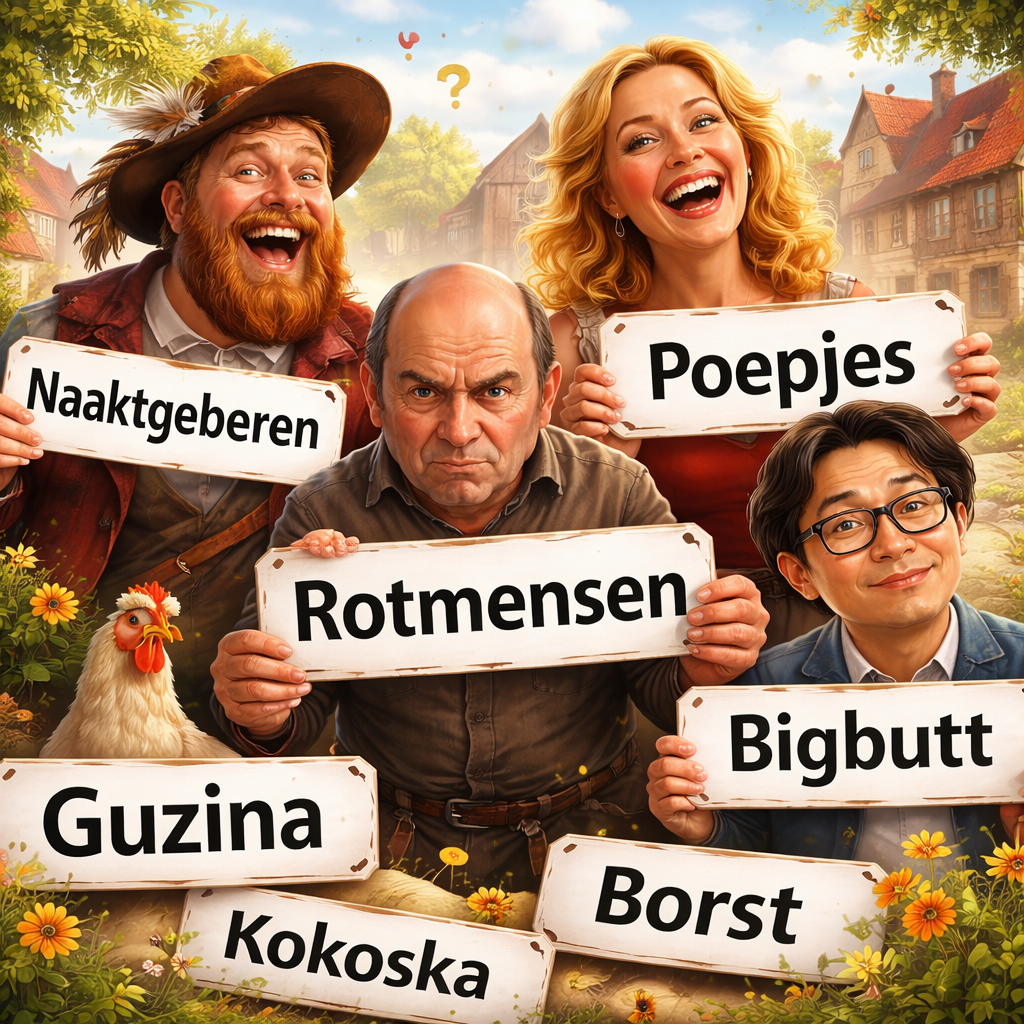
- Rotmensen (rotten people)
Some people got more creative:
- Donderwinkel (thunder store)
- Spring in ’t Veld (Jump in the Field)
- Suikerbuik (sugar belly)
- Scheefnek (crooked neck)
- Paardebek (horse’s mouth)
- Kaasenbrood (“cheese and bread”)
And some opted for the slightly rude:
- Borst (Breast)
- Naaktgeboren (born nude)
- Poepjes (little shit)
- Piest (to pee)
- Uittenbroek (out of his pants)
A similar thing happened in the Balkans during surname registration
This list comes from a surname census conducted in Bosnia. It found some interesting names. Unlike the Dutch, these weren’t the result of a disgruntled population. Well, the surname Krivokuca, which means ‘wrong house’, might be, but most seemed to be nicknames or someone having a laugh. Some of these are anecdotal, but most seem real from what I can tell.
- Guzina (big butt)
- Guzanovi? (Buttocks)
- Kokoska (chicken)
- Budalica (little fool)
- Zaklan (roughly “slain by a knife”)
- Prcic (have sex)
- Osoba (Person),
- Litra (Litre)
- Kajgana (Scrambled eggs)
Some of these names are rare, but they exist. There were even 56 people with the surname Drakula (which, as you may have guessed, means Dracula).
Japan joins in but is predictably more polite about it
In 1868, the Japanese government decided that all commoners should pick a surname. Most took it pretty seriously, but some had a bit of fun, often revealing context about location or personal preferences.
For example, the surname Hiradaira means ‘flat and flat’, Takanashi means ‘little birds playing’ (but is pronounced ‘There is no eagle’), and the relatively common Oogami means ‘great god’.
Some surnames are just dates. The most obvious example is the common surname Date, which handily means ‘Date’. But others include Hazumi (1st August), Tsumezdume (29th December), and Gogatsu (the month of May).
Final thoughts
While researching this, I kept coming across surnames that were funny in other languages. But that is just unfortunate, and I don’t want to come across as simply pointing and mocking – well, maybe just a little.
But what had first caught my interest was how these surnames gave an insight into the people, the times they lived in, and how they saw the world around them. Many of those listed above came about when peasants were forced to come up with something, and as they were generally illiterate, it provides a rare look at their state of mind, which wouldn’t otherwise have been written down.
They can also be pretty funny.
This article originally appeared on my Medium publication, Intriguing Times. Check it out if you enjoy amusing historical tales.