




















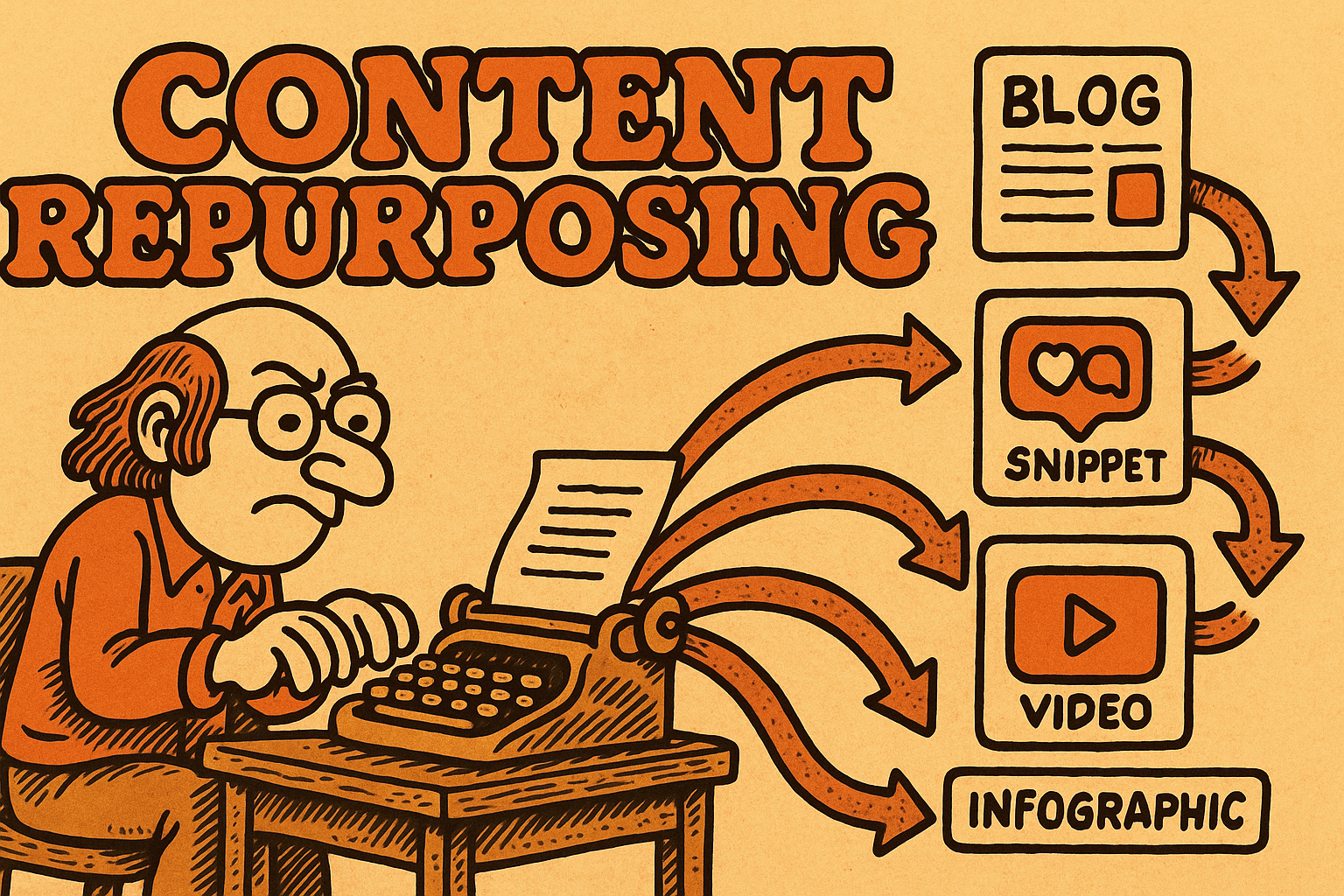
Work Smarter, Not Harder: Repurposing old Content Is Awesome

Repurposing articles is a great tool in a writer’s repertoire. When it comes to the wonderful world of online content, productivity, (namely speed and efficiency,) is key. As writers, we pour our heart and soul (most of the time) into crafting compelling articles, blog posts, and stories.
But what if you could extend the lifespan of your work and reach a wider audience without starting from scratch every time? The answer lies in content repurposing. It sounds a bit buzz-wordy I know, but if you don’t do it, it feels wasteful. And no one likes waste.
What is content repurposing?
Content repurposing is the practice of taking existing content and transforming it into new formats for different platforms. This saves time and effort, amplifies your message, and builds a stronger online presence. It is an easy way to improve productivity.
For example, I used to regularly publish on Medium, and quite a few of the articles went viral. They made decent money for a bit, but then, slowly but surely, they didn’t. But they were still great articles.
The same goes for other sites I have written for over the years, where I’ve built a small following and a decent archive of articles. Now, I’m repurposing that content, breathing new life into it on my Substack newsletter, and it has been a godsend. It has also freed me up to focus on other projects.
So, how can you make content repurposing work for you? Here are a few strategies. I don’t use all of these, as I only write, but if you create stuff, some of these should help.
Blog Posts to Social Media Snippets:
Your blog posts are a goldmine of shareable content. (Although that’s obviously subjective.) You can break down key takeaways, quotes, and statistics into bite-sized social media posts. It’s also pretty easy these days to create eye-catching graphics using tools like Canva to accompany your text.
You can turn a listicle into a carousel post on Instagram or a thread on Threads. For example, a blog post about “5 Tips for Overcoming Writer’s Block” can become five individual tweets or Instagram posts. Social media threads comprised of lots of numbered entries are very popular.
Articles to Email Newsletters:
Email newsletters are a fantastic way to grow an audience and drive traffic back to your website or blog. Repurpose your articles by summarising the main points and including a link to the full piece.
This provides value to your subscribers while promoting your existing content. Be nice to your subscribers! On Substack, I sometimes do this using the Notes feature.
Articles to Podcast Episodes or YouTube clips:
If you have a podcast or are considering starting one, your written content can serve as excellent fodder for discussion. Read your article aloud, adding personal anecdotes, insights, and answering potential listener questions. This creates a new way for your audience to consume your content and expands your reach to podcast listeners.
It is also pretty easy to turn the article into a script for a YouTube video. There are apps that can even read stuff for you. These are getting better by the month, but I’m personally a bit wary at the moment, as you can often tell. I guess they are good if you have a weird voice or a thick accent.
Blog Posts to Infographics:
Visual content is highly engaging and shareable. If your content consists of data-heavy blog posts or articles, you can turn them into visually appealing infographics. Tools like Piktochart and Visme can help you create professional-looking infographics even without design experience. These can be shared on social media, embedded in blog posts, or even printed for offline distribution. This doesn’t fit my content, but it can look pretty impressive if you can make it work. (And add a link to your other stuff.)
Articles to Short Videos:
Short-form video is dominating social media. I’m not a fan, but I am also not one to judge. This is similar to creating YouTube videos.
There are a load of ways you can turn your articles into short, engaging videos by creating a voiceover and adding relevant visuals. Platforms like TikTok, Instagram Reels, and YouTube Shorts are perfect for this type of content. A concise summary of your article, combined with dynamic visuals, can capture attention and drive traffic to your longer pieces.
Sora and other video generators will be able to help with this soon. Some creators are using these tools already, but at time of writing, the longest clip you can create is 20 seconds. I also find it hard to do and a bit time consuming, but I am useless at that kind of thing.
How I have used repurposing for Substack and my sites
Repurposing my Medium articles for Substack has been incredibly rewarding – and necessary if, like me, you occasionally stretch yourself a bit thin.
I’ve been able to reach a new audience while also giving my older work a second lease of life. Some of my content had over 60,000 reads in their first month, but now get 60. By adding a personal introduction, updating any outdated information, and including a clear call to action to subscribe to my Substack, I’ve seen increased engagement and growth.
It still takes some time, but a lot less. Consequently, I have more time to create new material and research new stories.
Content repurposing isn’t being lazy – it’s about being productive with your own superb content. (Although it’s also helpful if you are lazy.) Hardly any of my Medium readers look at my Substack, so I am reaching out to new audiences with content I have written that was previously behind a paywall. If it is interesting once, it should be again.
Repurposing is about maximising the value of your hard work and reaching a wider audience. It is a colossal cliche, but it lets you work smarter, not harder, and build a greater online presence.
You can check out my Substack here and see what I’ve been doing.